

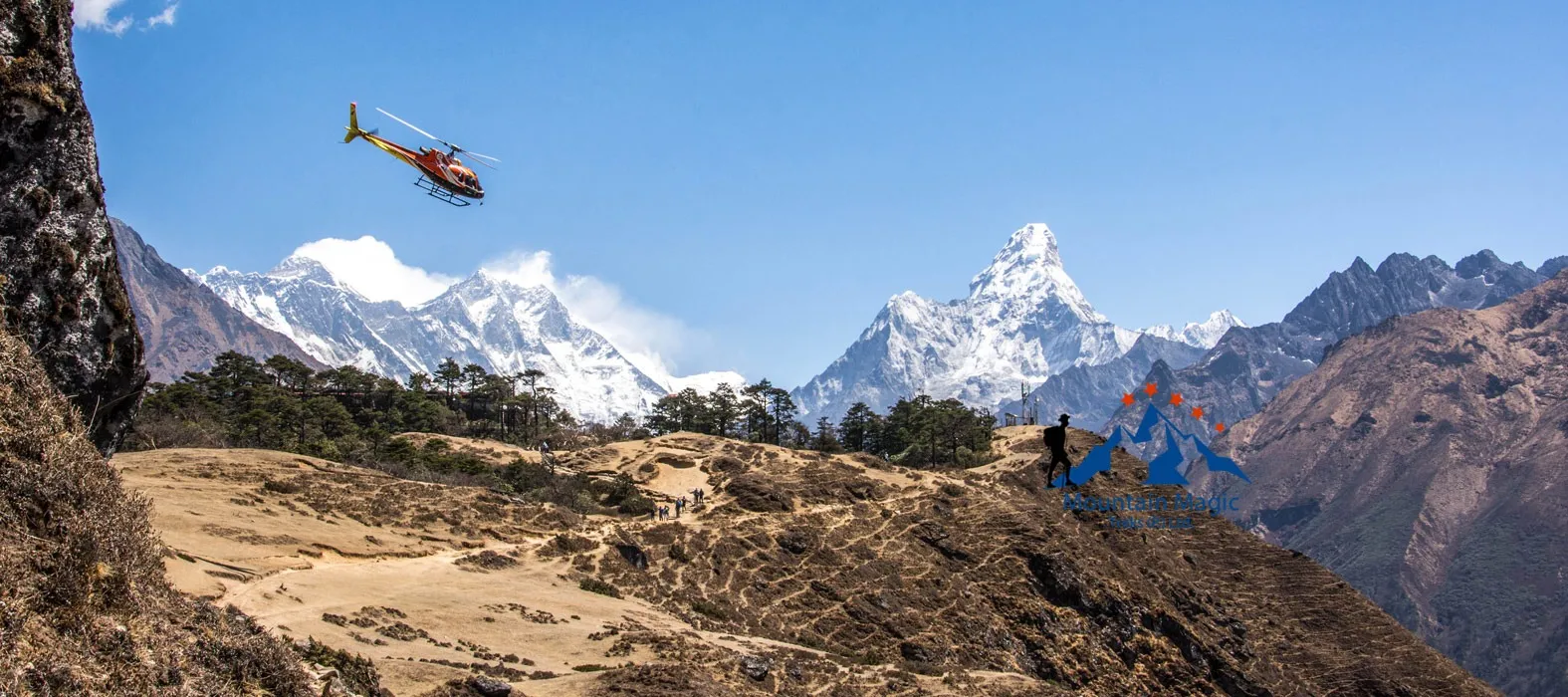
Some mountain trips are about reaching a destination. Others are about everything that happens before you get there.
The Everest Base Camp Trek With Helicopter Return gives travelers both. You walk through the Khumbu region, spend nights in mountain tea houses, experience Sherpa culture, and slowly climb toward Everest Base Camp. Once the trek is complete, a helicopter takes you back toward Kathmandu instead of making you walk the same route again.
This makes the journey a good choice for people who want a real Everest trekking experience but have limited time. The trip listed by Mountain Magic Treks runs for 10 days and includes helicopter flights between Kathmandu and Lukla, followed by a helicopter return from the Everest region.
Your First Look at the Khumbu Region
The adventure starts in Kathmandu before the mountains become the main part of the trip.
From Kathmandu, the helicopter flight to Lukla gives you an early look at the Himalayan landscape. The flight itself becomes part of the experience instead of simply being transportation.
Once you reach Lukla, the walking begins.
A Quiet Start at Phakding
The first walking section takes you toward Phakding.
The trail follows the Dudh Koshi River and passes through small settlements, green hills, and areas of forest. It is a gentler introduction to the trek compared with the much higher sections that come later.
This is also when the trip starts to feel different from a normal vacation. Your feet are doing the work, and the landscape changes with every hour.
The Climb to Namche Changes the Pace
The walk from Phakding to Namche Bazaar is longer and includes a major climb.
You cross suspension bridges and enter Sagarmatha National Park before making your way toward Namche. The final uphill section can feel tough, especially for people who are not used to mountain walking.
The route reaches Namche Bazaar at about 3,440 meters. The trip plan allows two nights here, including an acclimatization day.
What to Do During the Extra Day
An acclimatization day does not mean sitting inside your tea house all day.
You can take a short hike around the area. The itinerary suggests options such as the Everest View Hotel, Khumjung, Khunde, and the local museum and information center.
The point is simple: climb a little, come back, and let your body adjust.
That patience becomes more important as the altitude increases.
Tengboche Adds Culture to the Trek
After Namche, the trail continues toward Tengboche.
This village is known for its Buddhist monastery and wide mountain views. The area also gives trekkers a chance to see an important part of Sherpa culture rather than spending the entire trip focused only on Everest.
The trail can feel peaceful here. You may hear bells, see prayer flags moving in the wind, and watch the mountains rise behind the hills.
A View Worth Stopping For
Tengboche is surrounded by major Himalayan peaks, including Ama Dablam.
Instead of rushing through this section, take a moment to look around. Mountain trekking is not only about reaching the next overnight stop.
Sometimes the best memories come from standing still.
Dingboche Is Where Altitude Becomes Serious
From Tengboche, the route continues toward Dingboche at roughly 4,410 meters.
The landscape is more open now. Trees become less common, and the air feels thinner.
The trip plan includes another acclimatization day here. Trekkers can hike toward Nangkartshang Peak before returning to Dingboche.
Why Slow Walking Helps
At this height, speed is not your friend.
You may notice that a short climb takes more effort than expected. Walking slowly gives you time to breathe and helps you manage your energy.
There is no prize for reaching the tea house first.
The goal is to keep moving safely.
The Trail Starts Looking Like the High Himalayas
After Dingboche, the scenery changes again.
The route toward Lobuche passes through rocky ground and brings you closer to the Khumbu Glacier. You also pass the memorial area near Thukla, where memorials honor climbers and mountaineers who lost their lives in the Himalayas.
It can be a quiet and emotional part of the journey.
The mountains around you are no longer just beautiful scenery. They remind you that high-altitude climbing demands respect.
Everest Base Camp Is Finally Within Reach
The next stage takes you toward Gorakshep and then Everest Base Camp.
This is one of the longest and most demanding days of the trip. The itinerary lists about 7 to 9 hours of trekking for the journey to Base Camp and back to Gorakshep.
At this altitude, every step matters.
Keep Your Daypack Light
When heading from Gorakshep toward Base Camp, you do not need to carry everything you brought on the trek.
Leave unnecessary luggage at the tea house and take only what you need for the walk.
Carry essentials such as:
-
Water
-
Warm layers
-
Snacks
-
Camera or phone
-
Sunglasses
-
Basic personal items
A lighter bag can make a noticeable difference during a high-altitude walk.
Reaching Base Camp Is Only Part of the Story
Everest Base Camp sits at around 5,364 meters on the listed itinerary.
When you arrive, give yourself time to take it in.
You can see the glacier and the huge mountain landscape around the camp. This is the place you have been walking toward since leaving Lukla.
Take photographs, enjoy the moment, and remember that you do not need to rush.
The return to Gorakshep is still ahead.
Kala Patthar Brings the Big Finish
The following morning offers another major experience.
The climb toward Kala Patthar reaches about 5,545 meters, making it the highest point listed on the trip.
This viewpoint is famous for close views of Mount Everest and the surrounding peaks.
Why Sunrise Makes It Special
Early morning light can change the whole appearance of the mountains.
The peaks slowly catch the sunlight while the valleys remain darker below. Everest, Pumori, Nuptse, and Lhotse can look completely different from the way they appeared during the previous days.
It is worth getting up early for.
The Helicopter Becomes the Final Chapter
After the walking portion is finished, the journey changes completely.
Instead of following the trail back through Lobuche, Dingboche, Namche, and Lukla, the helicopter picks up trekkers around Gorakshep, subject to weather and flight conditions.
This is the part that makes the Everest Base Camp Trek With Helicopter Return so different.
See the Route From Above
For days, you have been looking at the mountains from the trail.
Now you can look down at the trail.
The helicopter offers views of glaciers, valleys, villages, forests, rivers, and mountain ridges from a completely different angle. The trip page notes that the return flight can involve a stop around Lukla depending on flight operations and passenger arrangements.
Weather can also affect the flight. Mountain conditions are not something that can be controlled, so flexibility is important.
What Kind of Traveler Will Enjoy This Trip?
The Everest Base Camp Trek With Helicopter Return is especially useful for travelers who want to experience the trek without spending several additional days walking back.
It can work well for:
-
Busy professionals
-
First-time Everest trekkers with good preparation
-
Travelers with limited vacation days
-
Couples and small groups
-
People who want an aerial view of the Everest region
But do not make the mistake of thinking the helicopter makes the trek easy.
You still walk at high altitude. The itinerary describes the trip as moderate to strenuous, with daily activity often lasting around 6 to 7 hours.
A Few Things to Keep in Mind
High-altitude trekking requires common sense.
Walk at a steady pace, drink enough water, eat properly, and follow your guide’s instructions. If you feel unwell, tell your guide instead of trying to hide the problem.
Weather also deserves attention. Spring and autumn are listed as the main trekking seasons, but mountain conditions can still change quickly.
Pack for cold weather even if the lower parts of the trail feel comfortable.
Conclusion
The Everest Base Camp Trek With Helicopter Return is not simply a shorter way to visit Everest.
It gives you time to experience the trail, meet people in mountain villages, learn about Sherpa culture, adjust to high altitude, stand at Everest Base Camp, and climb to Kala Patthar. Then, instead of repeating the same trail, you return through the sky.
That final flight changes the way you see the entire journey.
The villages that once seemed far apart become tiny points below. The trails you worked hard to climb become part of one huge Himalayan landscape.
And that is what makes this style of Everest trip memorable.
FAQs
How long is the Everest Base Camp helicopter trek?
The listed itinerary takes 10 days from arrival in Kathmandu through the trek and return.
Does the trip include acclimatization days?
Yes. The itinerary includes acclimatization in both Namche Bazaar and Dingboche.
What is the highest point of the trek?
Kala Patthar is listed at about 5,545 meters above sea level.
Is the helicopter return guaranteed?
No flight should be treated as guaranteed in mountain weather. Wind, clouds, visibility, and other operating conditions can affect helicopter schedules.
Do I still need to be fit for this trek?
Yes. The helicopter only replaces the return walking section. You still need to handle several days of trekking at high altitude.
